CAP Cell – Nurturing Career Awareness, Aspirations and Future Readiness at DCM YES
“From Curiosity to Clarity: The CAP Journey at DCM YES”
What do you want to become when you grow up?
At DCM YES, we believe this question does not have to be answered in a single conversation—or at a particular age. It is a journey of discovering who you are, exploring what the world has to offer and gradually finding the pathways that excite you.
At DCM Young Entrepreneurs School (DCM YES), career counselling is not viewed as a one-time activity undertaken only when students reach the senior secondary years. It is an evolving and continuous process that begins from Grade 6 onwards, enabling students to gradually understand themselves, explore possibilities, build essential skills and make informed decisions about their academic and career pathways.
The Career Awareness and Planning (CAP) Cell at DCM YES works towards creating a structured career guidance ecosystem where students are introduced to career exploration at an early stage and are progressively supported as they move towards higher education and professional life.
Building Career Awareness from the Middle School
For students of Grades 6 to 8, the focus of career counselling is primarily on self-awareness, exposure and exploration. At this stage, students are encouraged to understand their strengths, interests, aspirations and areas of improvement rather than being expected to make definitive career choices.
Through interactive and age-appropriate activities, students explore questions such as “Knowing Me,” “Where do I see myself in the future?” and “Where do I see myself after school?” These activities encourage students to reflect on their interests, abilities and aspirations and develop an understanding of the wide range of career possibilities available to them.
Key initiatives for Grades 6–8 include:
Knowing Me: Activities focused on self-awareness, strengths, interests and areas for improvement.
- SWOT Analysis: Students identify their strengths, weaknesses, opportunities and areas for growth.
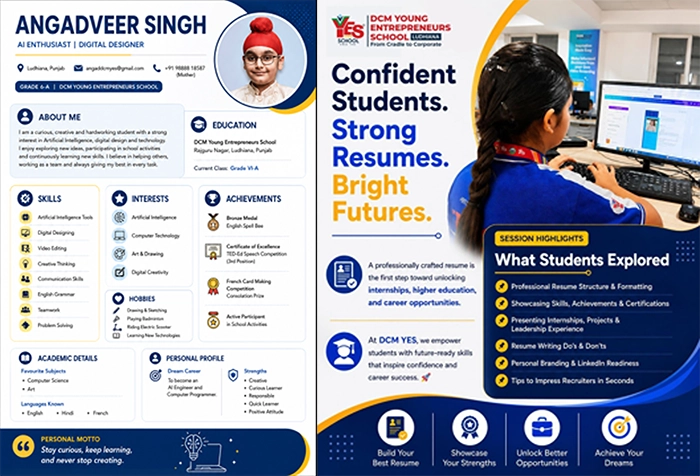
- My First CV: Students are introduced to the concept of a CV and learn how to present their achievements, skills and experiences.
- LinkedIn Awareness: Students are introduced to the idea of a professional digital profile and the importance of building a positive professional identity.
- Career Awareness Sessions: Students are exposed to conventional as well as emerging and non-traditional career pathways.
- Career Professionals and Role Models: Interactions and workshops help students understand different professions and the skills required for them.
- Future-Focused Activities: Students reflect on their aspirations and visualise where they see themselves after school.
Workshops and Interactive Activities: These provide students with opportunities to learn about careers beyond the traditional choices and understand the changing world of work.
The objective at this stage is to create curiosity rather than pressure, helping students develop an open mindset towards different educational and career possibilities.
Career Exploration and Decision-Making in Grades 9–10
As students progress to Grades 9 and 10, career counselling becomes more structured and focused on understanding individual strengths, interests and possible academic pathways.
Students are introduced to psychometric assessments that help them gain insights into their aptitude areas, interests, personality traits and career preferences. The results provide a starting point for meaningful conversations between students, counsellors and parents and help students explore possible academic and career directions.
Students are also guided on:
Subject and stream selection
- Career options linked to different subject combinations
- Conventional and emerging careers
- Course and university exploration
- Profile building
- LinkedIn profile development
Career research and decision-making
The CAP Cell also organises university workshops and expert interactions, allowing students to learn directly from universities and professionals about courses, career pathways and future opportunities.
Preparing Senior Students for Higher Education
For students of Grades 11 and 12, the focus of career counselling moves towards career clarity, university selection, application planning and higher education readiness.
The CAP Cell facilitates one-on-one counselling sessions where students can discuss their individual interests, academic profiles, career aspirations and university preferences. These personalised conversations help students understand the options available to them and plan their next steps more systematically.
“The World Beyond the Classroom”
From university representatives walking into our classrooms to students stepping into professional environments through industrial visits, the CAP Cell brings the real world closer to our students.
University Workshops and Higher Education Exposure
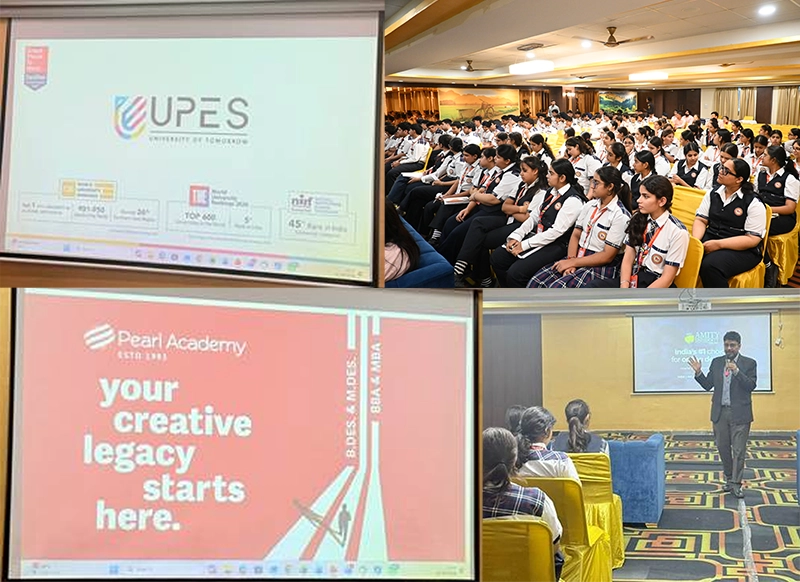
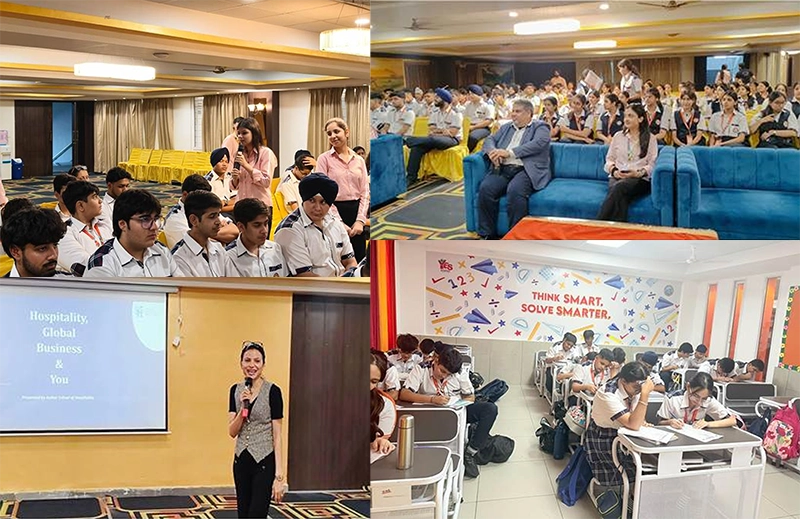
One of the important initiatives of the CAP Cell is the organisation of University Workshops and Campus Interactions. Universities from India and international institutions regularly engage with DCM YES students through workshops, information sessions and counselling interactions.
These sessions expose students to:
Undergraduate programmes and specialised courses
- Emerging career pathways
- Admission criteria and application processes
- Entrance examinations
- Scholarships and financial aid
- International education opportunities
- University-specific requirements
Career outcomes and industry exposure
Such interactions provide students with the opportunity to ask questions directly to university representatives and gain first-hand information while exploring their higher education choices.
Industry Exposure Through Industrial Visits
The CAP Cell also recognises that career awareness extends beyond classrooms and university campuses. Industrial visits are therefore incorporated into the career counselling programme to provide students with exposure to real-world workplaces and professional environments.
These visits help students understand how different industries function, observe professionals at work and connect classroom learning with practical applications. They also allow students to develop a better understanding of the skills, qualifications and competencies required in different sectors.
Building a Professional Identity
In today's rapidly changing professional landscape, students need to understand not only academic qualifications but also the importance of skills, experiences and professional identity.
The CAP Cell therefore introduces students to CV building and LinkedIn profile development as part of the broader profile-building process. Students learn how to present their achievements, skills, activities, projects and experiences in a structured and professional manner.
The emphasis is on helping students gradually build their profiles rather than waiting until the time of university applications or employment.
A Continuous Journey from Awareness to Action
The CAP Cell at DCM YES follows a progressive approach:
Grades 6–8 → Self-Awareness & Career Awareness
↓
Grades 9–10 → Exploration, Psychometric Assessment & Stream Awareness
↓
Grades 11–12 → Career Clarity, University Exploration & Application Readiness
↓
Higher Education → Informed Academic & Career Pathways
This progression ensures that career counselling remains a continuous developmental journey rather than a single intervention.
Empowering Students to Make Informed Choices
The central philosophy of the CAP Cell is to help students understand that there is no single definition of career success. Every student has a unique combination of interests, abilities, aspirations and learning styles.
Through career counselling, psychometric assessments, university interactions, industry exposure, workshops, profile building and individual guidance, the CAP Cell provides students with opportunities to explore multiple pathways and make informed decisions about their future.
At DCM YES, the journey from “Knowing Me” to “Knowing My Career” and eventually “Planning My Future”begins early. By integrating career guidance into the school experience from Grade 6 onwards, the CAP Cell aims to nurture students who are not only academically prepared but also self-aware, informed, adaptable and future-ready.
Workshops at DCM YES
Psychometric Assessment – Understanding Yourself Better
At DCM YES, psychometric assessments are an important part of the career counselling journey for students in Grades 9–10. These assessments help students gain insights into their aptitudes, interests, personality traits and career preferences.
The results provide a foundation for meaningful conversations with students, parents and counsellors, helping students explore suitable subjects, streams, courses and career pathways based on their individual profiles.
“The first step towards choosing the right path is understanding yourself.”
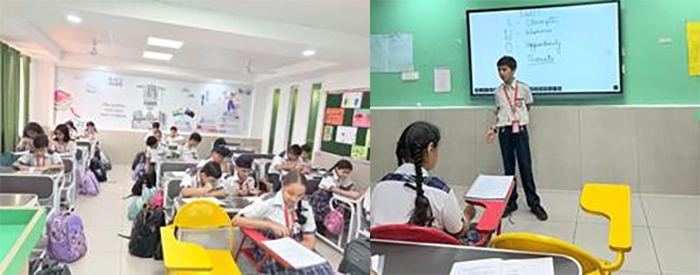
A session on SWOT was introduced to Grade VI students to help them develop self-awareness and understand the importance of recognizing their personal abilities and areas for improvement.
Students actively participated in the discussion by sharing examples from their own lives and identifying their strengths, weaknesses, opportunities, and challenges. The interactive session encouraged self-reflection, confidence-building, and critical thinking while helping students understand how SWOT analysis can support personal growth, goal setting, and better decision-making from an early age.
Learning Beyond the Classroom: Student Internships
At DCM YES, students of Grades 10 and 11 are encouraged to gain meaningful exposure through internships and experiential learning opportunities. These experiences allow students to explore their interests, develop practical skills and understand different career pathways beyond the classroom.
Student Internship & Experiential Learning – Where Did Our Students Go?
DCM YES students from Grades 10 and 11 have participated in diverse internship, leadership and experiential-learning programmes offered by organisations and institutions across India and internationally.
YLAC – Young Leaders for Active Citizenship: Based in New Delhi, YLAC’s High School Achievers programme in 2026 was conducted across Delhi, Bengaluru and Kolkata, giving students exposure to leadership, public policy and civic engagement.
- UNITAR – United Nations Institute for Training and Research: Headquartered in Geneva, Switzerland, UNITAR is the training arm of the UN system. The programme listed in the student experiences provided exposure to themes such as climate change and global issues.
- Young Founder Summit (YFS): Students participated in an entrepreneurship-focused programme. The 2026 Chandigarh edition was held at The LaLiT Chandigarh, providing high-school students with an intensive experience in entrepreneurship, ideation, innovation and pitching.
BML Munjal University (BMU): Located at 67th Milestone, NH-48, Gurugram, Haryana, BMU provides a university-based learning environment where students explore areas including entrepreneurship and Artificial Intelligence.
University Workshops: Connecting Students with New-Age Opportunities
At DCM YES, the CAP Cell regularly organises university workshops to provide students with first-hand exposure to diverse courses, emerging careers and higher education opportunities. These sessions bring universities directly to the school campus, allowing students to interact with academic experts, understand new-age programmes and make informed choices about their future.
During the year, students had the opportunity to attend engaging workshops conducted by Amity University, Pearl Academy and UPES (University of Petroleum and Energy Studies).
Amity University introduced students to its wide range of undergraduate programmes and helped them understand the connection between academic choices, skills and future career opportunities.
Pearl Academy provided students with insights into creative and design-oriented education, highlighting opportunities across areas such as fashion, design, communication, media and related creative industries. The session encouraged students to explore creativity as a potential academic and career pathway.
UPES engaged students through an interactive session focused on emerging disciplines and industry-oriented education. Students gained an understanding of specialised programmes and the importance of developing skills aligned with evolving industry requirements.
These workshops offered students an opportunity to ask questions, explore possibilities and gain direct insights from university representatives. Such interactions are an integral part of the CAP Cell's endeavour to make career exploration a continuous and meaningful part of the school experience.
“When students meet possibilities, curiosity becomes clarity.”